Verses for Life
Ancient verses. Real life.
English, long-form, verse-by-verse motion movies from the Bhagavad Gita, the Bible and the Torah — starting with the Gita. Each episode takes a small cluster of verses, dramatises the story, explains what it really means, and shows how to live it in everyday moments.
New episodes Tue · Thu · Sat · 6:30 PM IST
Season One · The Bhagavad Gita — Chapter 1

How each episode works
Every episode opens with a real-life situation — a hard conversation, a decision between two places, a truth that has to be said out loud. Then the verses: 3–5 at a time, in the public-domain translation by Edwin Arnold, The Song Celestial (1885). Then what the verses mean, line by line, and how to live them — ending with one small action for today.
Each episode is 12–18 minutes, long-form only, and each one carries a different modern story from a different part of the world. The ancient scenes stay in India, on the field of Kurukshetra; only the modern stories travel.
Readings
Written companions to the episodes — each verse cluster explained in plain English, with the story behind it.
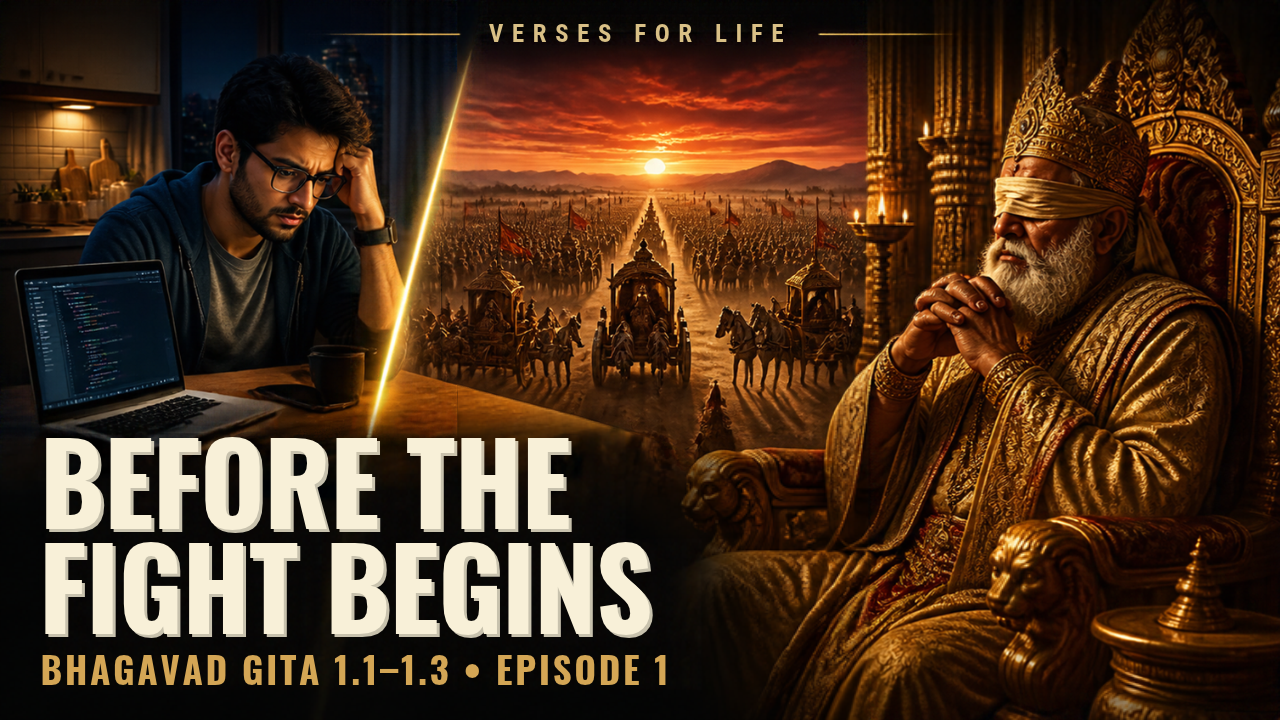
- Bhagavad Gita Chapter 1 Verse 1 Meaning: The Gita Begins With a Question
Gita 1.1–1.3 explained: a blind king asks what happened on the field of duty — the first lesson is about anxiety before a hard conversation.
- Bhagavad Gita 1.4–1.8 Meaning: Two Armies, One Family — Counting Both Sides Honestly
Gita 1.4–1.8 explained: Duryodhana names the warriors on both sides — the lesson is counting honestly when two places call you at once.
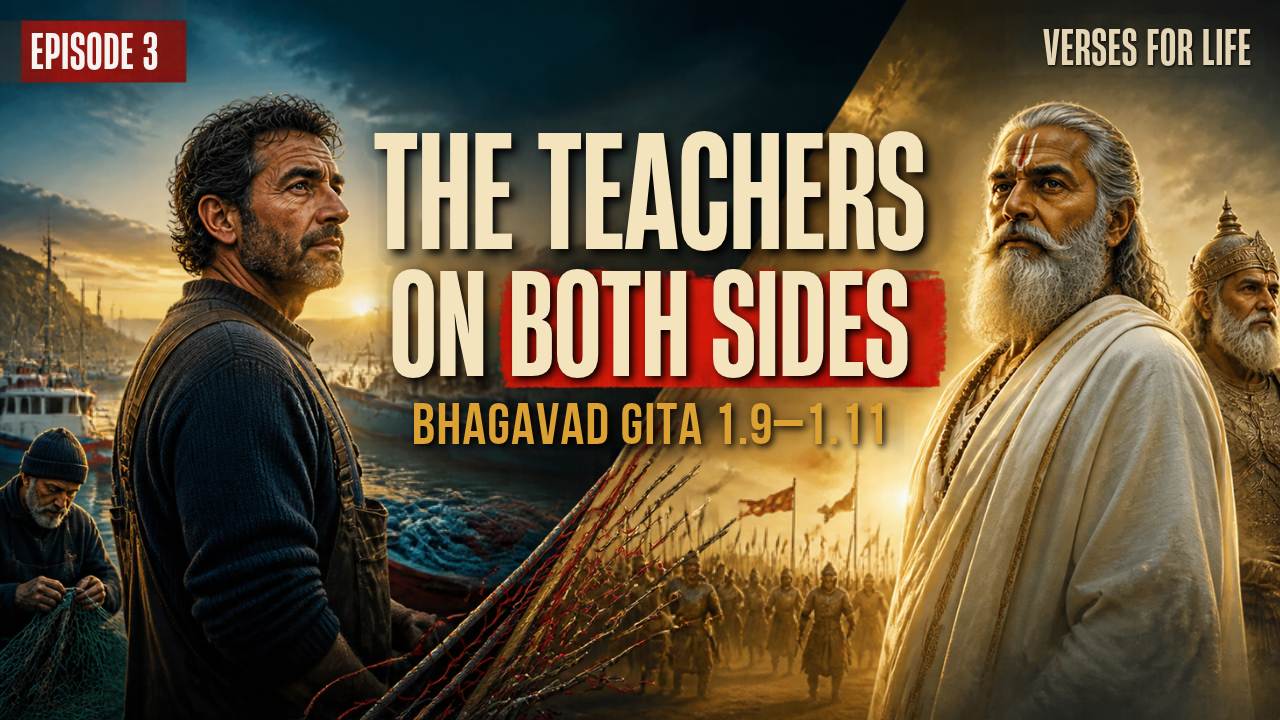
- Bhagavad Gita 1.9–1.11 Meaning: The Teachers on Both Sides
Gita 1.9–1.11 explained: Duryodhana names his champions, admits his side looks weakest, and orders the conch — when a decision goes public.
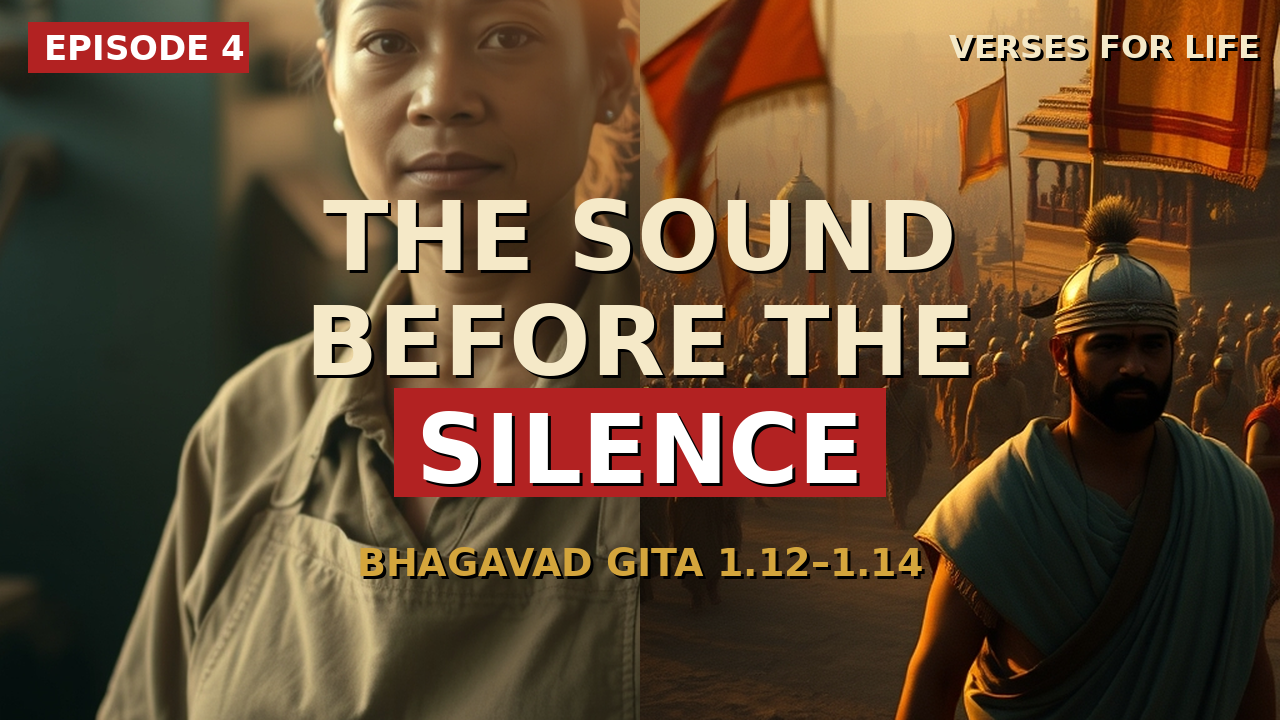
- Bhagavad Gita 1.12–1.14 Meaning: The Sound Before the Silence
Gita 1.12–1.14 explained: Bhishma blows the conch, the field answers; Krishna and Arjuna sound theirs back — a decision is only real when heard.
About
Verses for Life explains sacred books the way they were meant to be read: slowly, verse by verse, in the language of everyday life. The Gita comes first, then the Bible and the Torah. No lectures, no sermons — just ancient verses and the real lives they speak to.